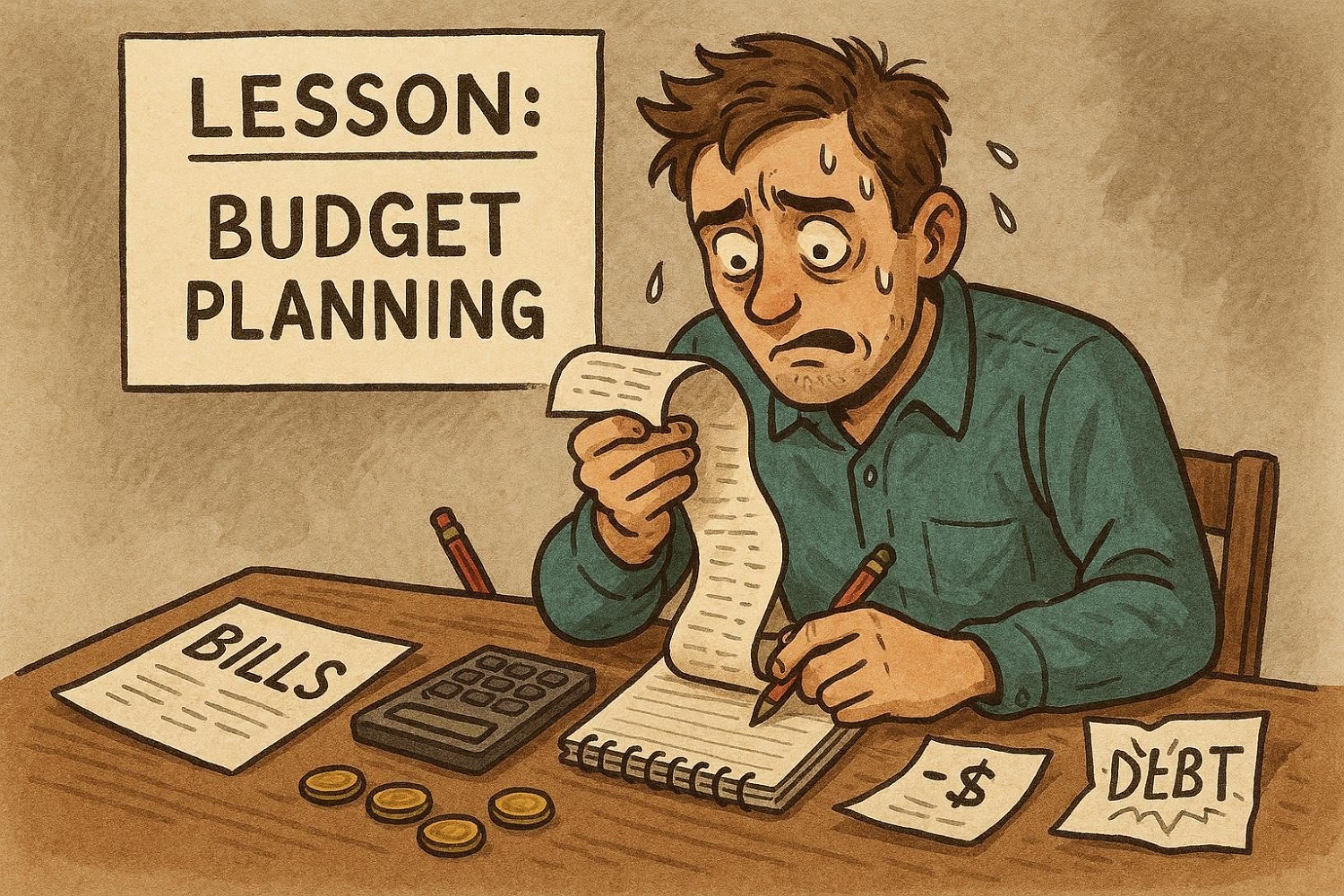
I always thought that I understood the meaning of budget planning. However, I found myself wrong when, for the first time, I realized how often my finances collapse before the end of the month.
I was earning money. I was paying bills. But I was still feeling stressed whenever an unexpected expense suddenly appeared. And that was the time when I first understood that earning money and managing money are two very different skills.
Like many other people, I didn’t have any formal training about handling money. Even no one ever explained how to divide the income or how to get prepared for surprise expenses or how to make a perfect plan for the future.
I always thought that budgeting simply meant spending less. And, in reality, that belief was the root of many of my financial problems.
When My Budget Was Just a List
My early or first attempt at budget planning was only a step. I just noted down the major expenses like rent, groceries, and fuel, and I felt that everything was perfectly organized.
But, with my utter idiocy, I completely ignored savings, emergencies, and even small personal expenses. And, whenever I overspent, I blamed myself. In short, I didn’t pay heed to the incomplete system I just prepared and start using.
When sudden costs appeared, such as phone repairs or urgent travel, I became anxious and felt utterly unprepared. I felt as if all my money was already “used.” The reality is I had never planned for real-life situations.
Unrealistic Goals Made Things Worse
Actually, I made one major mistake repeatedly, and that was setting unrealistic expectations.
I often had plans mentally for expensive purchases without having the financial capacity to support them. As a result, by the end of the month, my disappointment replaced my motivation.
Emotional spending also played a role. Seeing other people purchase new gadgets or upgrade their lifestyle frequently often pushed me to go with unnecessary purchases.
Undeniably, these decisions were rarely logical. The reason is they slowly created a major distance between my income and my actual financial needs.
Why My Budget Never Worked Long-Term
Why my budget never worked for the long term was because of its rigidity.
I never reviewed my budget once a new month started. Moreover, if something changed, I didn’t adjust it accordingly. I just felt confused and became frustrated. Over time, budgeting felt like a burden rather than a financial support system.
The frequent appearance of this issue made me realize that budget planning must be flexible. I learned a big lesson—a budget that doesn’t adapt to life will always fail.
The Budget Planning System That Finally Helped Me
Things began to change when I finally decided to simplify my approach.
I first started listing all my income sources, salary and other ones. In my next move I clearly separated essential expenses from my not-so-important lifestyle spending.
Now, before spending on my non-essentials, I ensured allocating money for savings and long-term investments. Furthermore, I started reviewing my spending every month. I saw that the monthly review process helped me to adjust the next month’s plan accordingly.
These essential changes in my budgeting system made the budget planning appear realistic instead of restrictive.
What Budget Planning Means to Me Now
After creating a flexible and realistic budget, planning my financial life no longer feels stressful. It now gives me more clarity and confidence.
Today I don’t feel guilty about spending my hard-earned money because I know it fits within a plan. Moreover, unexpected expenses no longer cause panic, as I have the confidence to get prepared for them.
I’ve learned one simple truth: that budgeting is not about perfection. It’s about possessing awareness and maintaining balance and consistency.
I just discovered one simple theory—when money has a clear direction, financial peace slowly follows.
Also read: