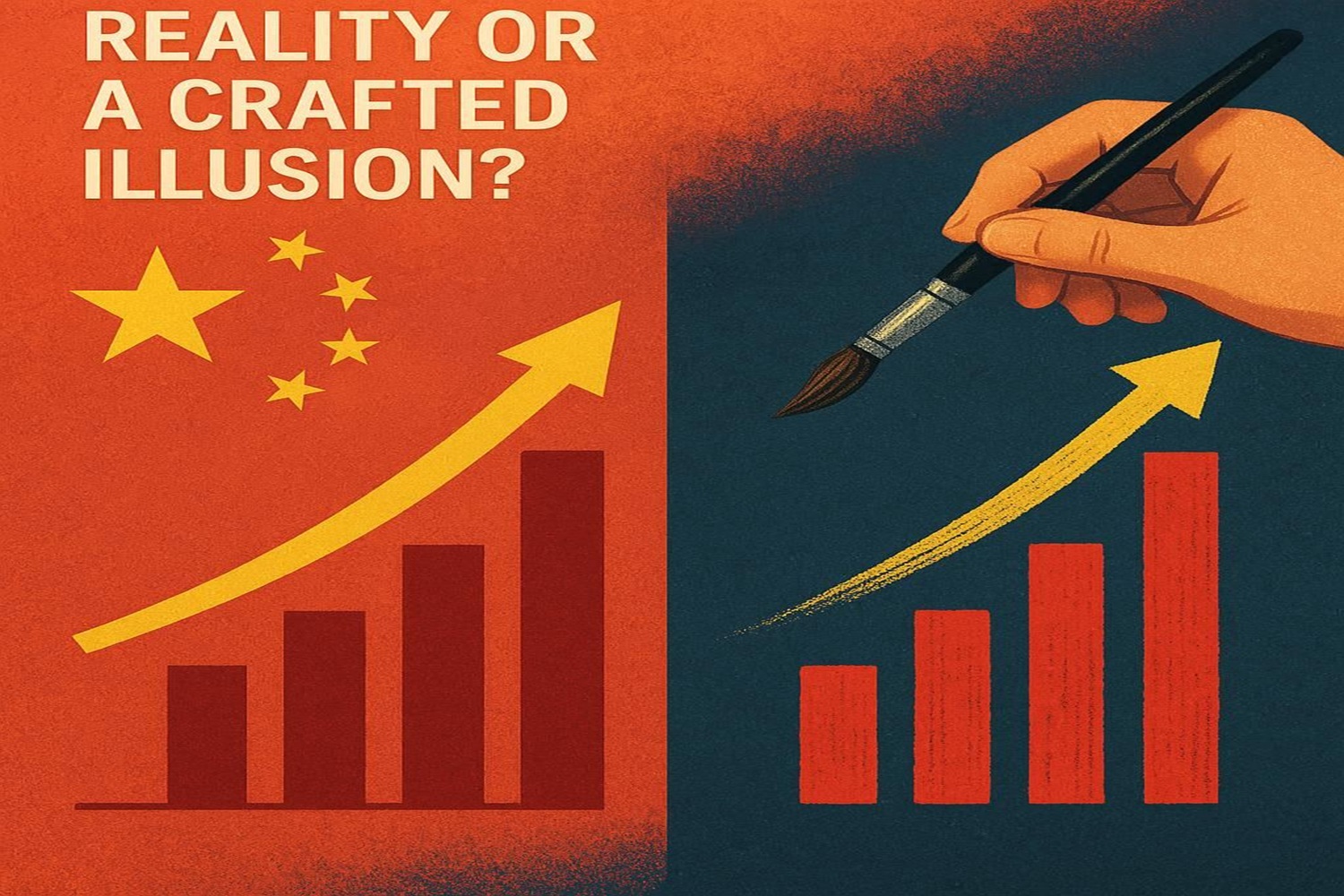
China’s Economic Boom: Genuine Growth or a Carefully Crafted Illusion? This question captures global attention. And worldwide economists, investors, and policymakers debate the reality behind the true health of the world’s second-largest economy.
China often projects an image of economic strength through impressive growth figures. The Asian country even continuously shows data regarding its massive infrastructure projects. However, this story of growth and projects unlocks the door of doubts. As a result, a sharp argument emerges that much of this boom may be a mirage hiding deep structural weaknesses.
The Case for Genuine Growth
None can deny the fact that China has achieved tremendous progress over the past four decades. The transformation story from a major agrarian society to an industrial and technological powerhouse is visibly promising and at the same time surprising. In fact, some opine that it has been nothing short of historic.
In present time, China leads the world in manufacturing output, renewable energy production, and electric vehicle exports. Its matchless Belt and Road Initiative has connected dozens of countries through trade and infrastructure. Undeniably, this project boosts Beijing’s global influence enormously.
Furthermore, supporters of China’s growth model emphasize that the country constantly posts solid GDP numbers, i.e., around or above 5% annually. They also point out that the country maintains this number even amid global slowdowns.
Several advanced sectors, including artificial intelligence, robotics, green energy, and high-speed rail, have now emerged as the new catalysts of expansion. According to a recent analysis by the Center for Strategic and International Studies (CSIS), China remains highly competitive in many key and major industrial segments despite increasing global pressures.
Beijing’s long-term strategy pinpoints China’s minute, careful planning. There is a visible intensive strategy to diminish foreign dependence. And accordingly, the Asian country’s government put constant emphasis on self-reliance in semiconductors, clean technologies, and defense manufacturing. In short, China prefers major investment in domestic research and education. And these initiatives point to a genuine intent aiming to maintain and boost growth in the long run.
The Illusion Beneath the Surface
However, many critics around the world argue that China’s economic boom may not be as solid and promising as it looks. The real story breathing beneath the glossy GDP reports holds and hides a mountain of debt that includes a sluggish real estate sector and declining consumer confidence. One acute example of this is the collapse of real estate.
On the one hand, this collapse is symbolized by the fall of known major developers like Evergrande. On the other hand, it has eroded household wealth and at the same time has shaken financial stability.
Local governments that once appeared as the engines of construction-led expansion are now literally drowning in hidden liabilities. Many experts also opine that the local government financing vehicles (LGFVs) collectively hold trillions of dollars in off-balance-sheet debt, and much of it is tied to low-yield projects.
Many critics say that this unsustainable borrowing has, in reality, artificially inflated GDP and undeniably unlocks the door for creating long-term economic risks.
Now, weak domestic demand is another part that adds fuel to the said challenges. Nowadays, Chinese households have become cautious about spending. One big reason is the job insecurity and falling home values.
Undoubtedly, this creates a paradox. On one side, factories are running and exports are strong. On the other side, consumer spending remains subdued, which means limiting the overall vitality of the economy.
Data transparency is another major persistent issue. Analysts from the famous Rhodium Group have strongly pointed out that China’s official statistics often paint or present an overly optimistic picture of growth. However, according to Rhodium Group report, alternative indicators like electricity consumption and freight traffic tell a more modest story.
A Balancing Act Between Strength and Strain
There is no denying that giving recognition to two opposite perspectives as true is indeed a tough task.
It is true that no one can question China’s industrial base, innovation potential, and promising infrastructure. But, at the same time, nobody can deny that the foundations of its current growth are under strain from excessive debt, demographic decline, and limited productivity gains.
Now, the government’s major challenge is to rebalance. Yes, the appearance needs to get shifted from investment-driven growth to a domestic consumption, entrepreneurship, and technological self-sufficiency powered nation.
Importantly, to execute this shift, clear and visible policies are needed to stimulate businesses and enhance rural income. In addition, strategic plans should be there to reform the property sector in this direction.
However, one cruel truth is the transition still won’t be easy.
China’s leadership must juggle between the coveted short-term stability and essential long-term reform. It is necessary to understand that too much stimulus could deepen debt, but, at the same time, too little could trigger unrest or stagnation.
Conclusion
So, the above discussion ultimately uncovers the question, ‘Is China’s Economic Boom Genuine Growth or a Carefully Crafted Illusion?’
The answer lies somewhere in between.
China’s accomplishments are undeniably real. No one questions its global influence, industrial power, and promising innovation. Yet the illusion emerges when numbers overshadow sustainability. Questions become inevitable when growth is boosted more by borrowing than by productivity.
This valid argument confirms that the coming decade will determine whether China can transform its temporary momentum into lasting prosperity. Or, whether history will remember this era as a shining facade built on fragile foundations.
Also read:
China’s Export Surge: A Looming Threat to Global Market Stability