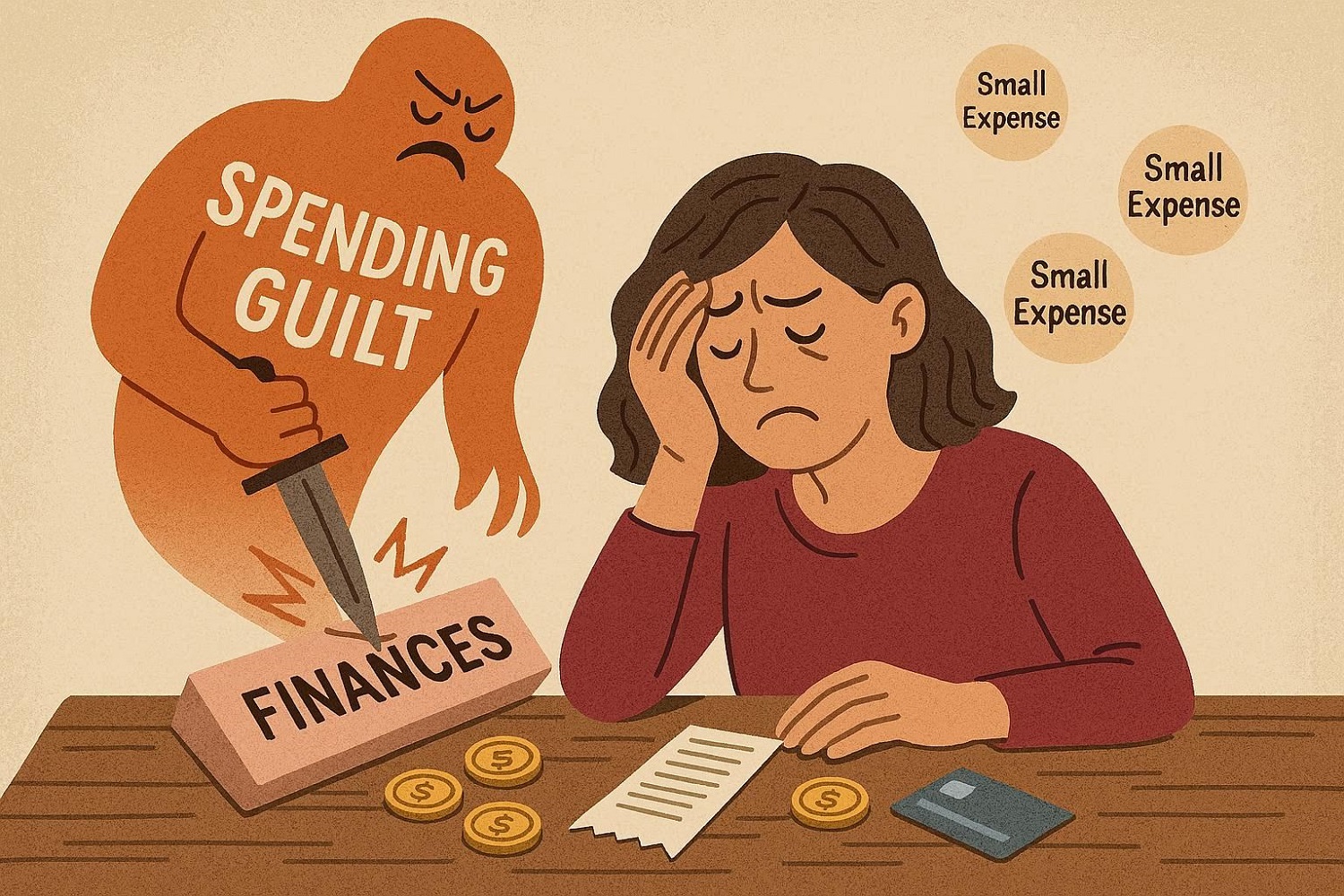
Spending guilt affects millions of people who often worry about every small purchase they make. Many times, it appears that only a cup of coffee, a quick lunch, or a movie ticket can cause anxiety and trigger concern about the future economy.
Many people even believe that these habits are the sole reason behind their unending financial struggle. In reality, this spending guilt itself may cause more damage than the spending.
Several studies show how many people often regret their everyday purchases, even when the spending amount is literally small. No doubt, this creates emotional stress around money. These men feel trapped between enjoying life and being responsible. Even after trying their utmost, they never have the feeling of being in control.
There are several reasons why spending guilt develops. One prime reason is the fear of judgment. Many persons worry that others will judge them as careless with money. As a result, they hide purchases or avoid talking about that spending.
Another key reason is past financial hardship. Those who grew up with limited resources often carry that fear into their adulthood. They bear this concern even when their situation improves.
Strict budgeting also plays a role. When every penny is assigned to bills and savings, then there is no room left for enjoyment. There is no denying that any unplanned expense then feels like a big mistake. Over time, this creates frustration and mental exhaustion. And living with constant spending guilt can undeniably lead to unhealthy financial behavior.
It is not new that a lot of people deny or deprive themselves of simple pleasures for months. They even skip breaks and choose to avoid social activities. All these bitter realities eventually build up a huge pressure.
However, when it becomes too much, they may go for one large impulse purchase. But that single decision usually costs far more than the small treats they were often avoiding.
Small pleasures are not the real enemy of financial progress. A cup of coffee or a short outing does not destroy long-term goals. Instead, these moments provide rest and balance. In truth, these small yet meaningful moments help people stay motivated in strict, demanding work routines in everyday living. Removing all enjoyment from daily life does not make someone financially smarter. It only makes life difficult, harder, insipid, and struggling.
Looking at the actual numbers with practical thinking helps put things into real perspective. It is indeed true that a small daily purchase may add up to a modest amount of spending over a month.
But this modest amount is usually insignificant compared to rent, medical bills, or loan payments. These major costs undeniably shape financial stability. On the contrary, minor expenses rarely do that thing.
Financial experts often advise people to quit small luxuries. This advice most of the time sounds logical at the beginning, but in real life it ignores real living conditions.
Not everyone has time, space, or tools to prepare everything at home. Many live in shared spaces or are forced to work long hours. And, for them, convenience is not a luxury. It is indeed a necessity.
Honestly, the most meaningful and better approach is to include enjoyment within a financial plan. When small personal spending is planned in advance, guilt naturally loses its power. Money that is saved for enjoyment is still part of the budget. Moreover, it does not break the system but rather supports it.
Another essential helpful step in this regard is to compare purchases with overall income and obligations. When people calculate a small expense, they often see and understand that it does not make any financial impact and changes nothing. Undeniably, this simple habit can decrease stress and anxiety and simultaneously improve confidence in decision-making.
It is also essential to avoid comparing financial lives with wealthy influencers or advisors. It is necessary to understand that their situation is not the same as that of an average worker or student.
One undeniable reality is that advice that fits and works for someone with big property and investments may not work in the same way for someone managing rent and loans. Every financial plan must match the practical situation of the person using it.
Money is not only for making savings. It is meant to support life. And support includes rest, connection, and experiences. A meaningfully balanced financial mindset always creates and allows space for both responsibility and enjoyment.
It is almost impossible to remember every small spending in daily life. In short, memories often outlast money. Yes, people rarely remember the exact cost of a trip or dinner years later.
They can remember how enjoyable the trip was or how tasty the dinner cuisine was. There is no denying that shared moments and new experiences shape long-term happiness. And the bitter reality is avoiding all spending in the name of discipline can remove these valuable parts of life.
However, that doesn’t mean the solution is reckless spending. It is thoughtful spending that can offer the best positive outcome.
Making a budget for enjoyment is as important as having a budget for bills. Proper understanding about where money truly goes always diminishes fear. And the best part is accepting with an open mind that small pleasures are part of a healthy life removes unnecessary pressure.
It is essential to understand that spending guilt does not create wealth. It only creates stress. A true, healthier financial life comes from balance, not punishment. Wise planning, realistic thinking, and ensuring room for enjoyment help people to build stability without sacrificing their well-being.
One key lesson is money should support life, not control it. When guilt fades and feelings have a sense of positivity, better choices appear. And when choices improve, peace of mind strengthens.
Also read: