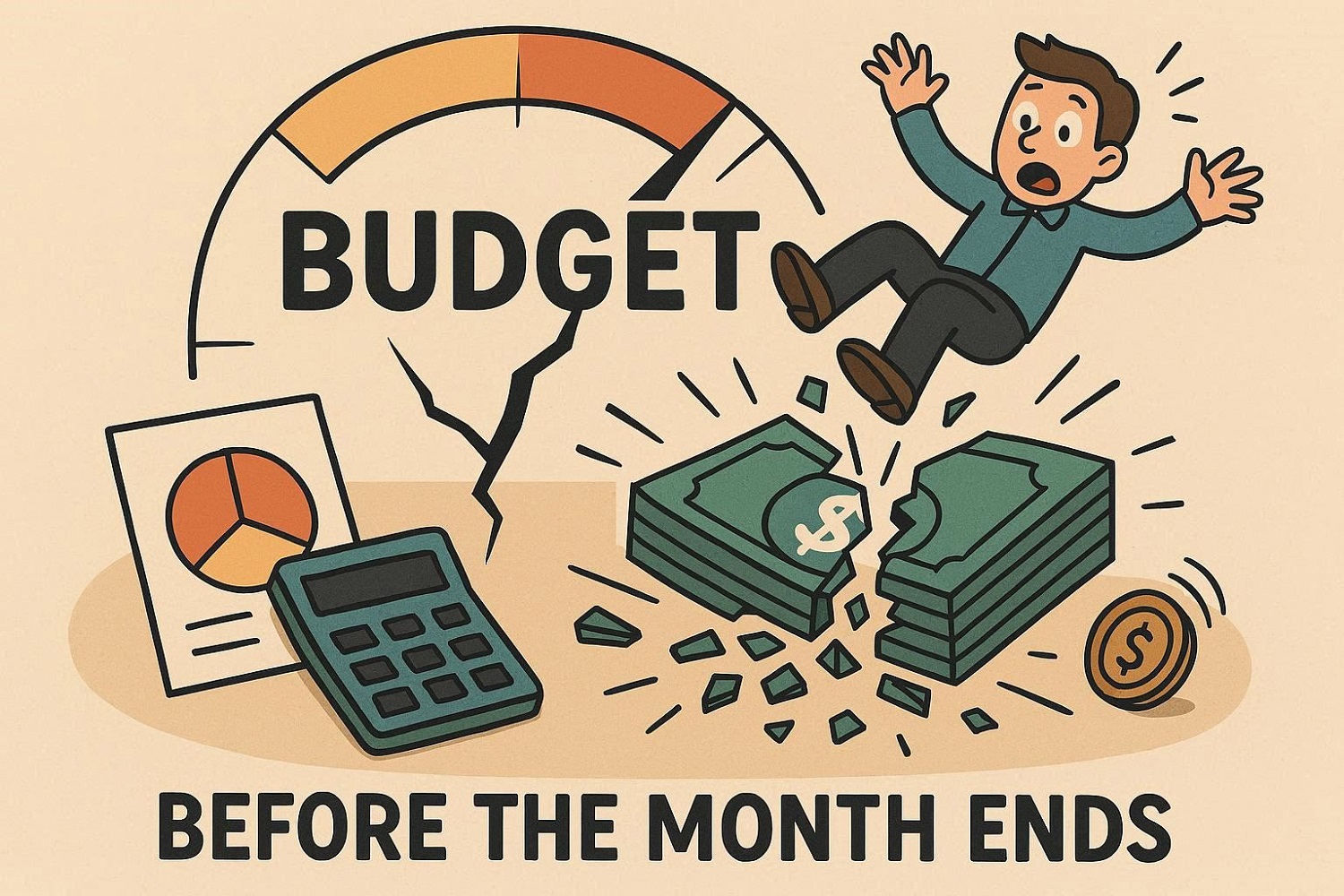
‘Budgets collapse’ is a term that is not often heard, although they very much exist in most human lives. It is not that people don’t care about money and so budgets collapse. The reason is budgeting systems are usually built without having a proper understanding about real human behavior.
In every house, at the beginning of every month, intentions remain strong. As a result, robust spreadsheets are made, purposeful apps are downloaded, and spending limits are set. However, this thoughtful financial plan quietly breaks down by the third or fourth week.
The bitter reality is that the above pattern repeats so often that many people start believing one simple theory: that budgeting actually doesn’t work for them.
But, in reality, this failure does not come from a lack of discipline. It usually emerges from how the budget is designed and managed.
Here are some core reasons that say in a practical and relatable way why budgets collapse before the month ends.
1. Most People Were Never Taught How to Budget Properly
One major reason why many budgets collapse is that most people don’t know how to meaningfully structure a budget.
Educational study in life usually focuses on earning, saving, and sometimes investing. But, most of the time, they don’t point to managing monthly cash flow. As a result, many people create their budgets on guessing.
They create categories without understanding the hidden differences in fixed versus variable expenses. Moreover, they knowingly or unknowingly underestimate irregular costs. They even tend to ignore annual obligations like insurance and maintenance.
Now the bitter parts arise when real-life expenses don’t match the assumptions. Consequently, frustration sets in. There is no denying that lack of a solid foundation confirms the budget’s appearance as inaccurate and unreliable. And it ultimately compels people to abandon it altogether.
2. Budgets Are Often Too Strict to Survive Real Life
Another common reason budgets collapse is unrealistic expectations. Yes, many people design budgets that look perfect on paper. However, it becomes utterly challenging to make them applicable in daily life.
These budgets decrease the scope of entertainment to zero. Sometimes the expense sheets even slash food expenses drastically. Many budget spreadsheets also forget to leave room for social and emotional spending.
Such overly tight budgets appear more like punishment rather than meaningful and purposeful guidance. Several real-life stories uncover how a financial plan gets ruined when an unexpected dinner, minor emergency, or impulse purchase occurs.
The truth is instead of making some meaningful adjustments between the expense and saving accounts, people often give up for the rest of the month. And this completes the cycle of budget failure.
3. Budgets Are Treated as Static, Not Flexible
Life is not fixed. Then why are the budgets fixed? This crucial question appears many times because there is a common tendency among men to treat the entire plan as static. They forget that income changes, prices rise, responsibilities grow, and priorities shift over time.
Surprisingly, even after knowing this truth, people often continue using the same budget month after month without adapting to the changes.
When expenses increase or circumstances change, budgets simply collapse because they no longer possess the ability to address the changed reality. It is necessary that a budget should evolve as life evolves.
The reality is without flexibility, even a well-designed budget gradually becomes outdated and ineffective.
4. Budgets Are Made Once and Then Forgotten
Neglect is one of the most overlooked reasons behind budget collapse. Many people set a budget at the beginning of the month and never look back at it again until they spend their entire fund.
The lack of regular check-ins confirms small overspending issues remain unnoticed and ensures serious financial impacts later.
Reviewing a budget on a regular basis always helps catch problems early. It allows relevant adjustments before things become out of control.
When budgets are ignored, they lose their purpose. Furthermore, they become passive documents and lose their zeal as active tools.
How to Prevent Budgets from Collapsing
Why budgets collapse is a million-dollar question, and understanding the reasons behind it is the first step to fixing the issue.
A realistic budget with simple and flexible features should be a priority. Also, it is necessary that the budget should reflect actual spending habits, not idealized ones.
It is essential to address several factors to improve consistency. Learning basic budgeting principles and making room for timely adjustments in budget plans over time are two crucial and unavoidable factors. Reviewing progress regularly is also essential to draw a meaningful budget.
Above all, budgeting doesn’t mean controlling everything randomly, including earning, saving, investment, and expenses. It is about clarity. When a budget is designed with reality and allows scope for time-to-time revision, then the budget becomes more supportive and less stressful.
Final Thought
Budgets collapse before the month ends not because people fail. It is the system that designs the plan that actually fails itself.
The reality is better understanding, realistic planning, and regular review of a budget plan ensure its shift from a monthly struggle to a sustainable habit that ultimately works remarkably.
Also read: