For many years, tobacco has been playing a major role in enriching the economy of Zimbabwe. The golden leaf still holds the baton as the country’s most valuable agricultural export. Hundreds of thousands of farmers are engaged in it, and as a result, the country is earning more than a billion dollars annually.
However, the current year is smelling a probable upcoming agricultural revolution in the state. There is no denying that tobacco is still dominating the field, but the current reality shows that a quieter agricultural revolution is taking shape. Yes, some present findings indicate that the said revolution is heading towards replacing nicotine with nutrition in the coming years.
In short, the increasing harvest of blueberries, the so-called superfood, could represent the future of the nation’s farming economy. Some available reports show that farmers and policymakers both are targeting to make blueberries the key promoter of financial health in the near future.
From Cigarettes to Superfoods
Currently, Zimbabwe is the largest producer of tobacco in Africa. In 2023, this African state generated a record $1.3 billion in export earnings, especially from this crop. And this happens because of the increasing demand from China.
Now, although tobacco revenues remain strong, health-conscious people and the critics often argue about the bad impact this crop brings on the social and environmental arenas. They unhesitatingly pinpoint its links to health crises. They even unlock the bitter reality about the heavy burden it places on land and water resources.
On the other hand, blueberries paint a contrasting and different picture. On the one hand, there is a rising demand globally for this superfood due to its unmatchable nutritional value. Yes, blueberries are rich in vitamins, antioxidants, and fiber. Moreover, they align with shifting consumer preferences toward a deep desire for healthier lifestyles.
For Zimbabwe, diversifying into this lucrative fruit unfolds two vital aspects. First, it offers a better and more promising economic opportunity. Second, it unlocks a promising chance for the country to rebrand its agricultural identity.
A Breakthrough with China
According to BBC News, a recent trade agreement with China has especially energized Zimbabwean farmers. In truth, China is the world’s biggest consumer market for blueberries. Reports indicate that Beijing, for the first time, has finally approved the import of Zimbabwean blueberries.
Furthermore, the treaty unlocks a tariff-free deal, which will literally help the African nation to earn more and thereby to boost its farming market as well as the state economy. Undeniably, this move gives Zimbabwe a significant edge over competitors such as South Africa, which has not yet received similar access to Chinese markets.
Many horticulture experts opine that the timing is perfect and couldn’t be better. In recent times China’s blueberry consumption has increased with rocket speed. And this trend is visible with the growing presence of this fruit in supermarkets, restaurants, and even traditional medicine-inspired recipes. Now, for the African nation, securing even a small share of this Chinese market, for sure, will transform its farming landscape.
Lessons from Peru and Morocco
The blueberry ambition of Zimbabwe emerges from some prominent precedents. Only 15 years ago, Peru produced less than 2% of the world’s blueberries. But today this Latin country has emerged as the single largest exporter of blueberries globally after overtaking the long-traditional leaders like Chile and the United States.
According to global experts, Peru’s success is the aftermath of a perfect combination of smart investment, favorable growing conditions, and aggressive market expansion. In addition, on the African continent, Morocco holds the baton of producing the highest amount of blueberries, i.e., more than 80,000 tonnes every year. South Africa has also emerged as a key supplier with 25,000 tonnes annually. However, recent increased U.S. tariffs have disrupted its trade flows.
Now, Zimbabwe remains a small producer as compared to these countries. It is expected that this African nation could reach 12,000 tonnes this year. Growth rates are undeniably rapid, as the forecast shows the country is trying hard to raise the blueberry production by 50% year-on-year. And the aim is to achieve 30,000 tonnes by 2030.
High-Tech Farming, High Stakes
There is a big difference between the process of producing tobacco and blueberries. Yes, harvesting tobacco is much easier compared to the said nutrient-rich fruit. The reality is blueberries are not a crop one can grow casually. The fruit demands precision. Famous cricketer and former captain of Zimbabwe’s national cricket team Alistair Campbell’s 50-hectare farm outside Harare is the biggest example of this truth.
Campbell’s 240,000 blueberry plants sit in imported pots filled with carefully curated soil. Moreover, each plant is irrigated up to eight times a day with filtered water. Also, the harvested fruits need immediate cooling in cold storage to maintain freshness for export. Now, such a minute operation requires steep investment, and the former cricket captain believes the rewards are worth it. According to him, the blueberry is a difficult crop, but the demand for this nutrient-rich fruit is unstoppable.
Some experts believe that the early harvesting season in Zimbabwe that begins in late March gives the country a sharp competitive advantage by reaching global markets ahead of Peru and other global heavyweights.
The Employment Factor
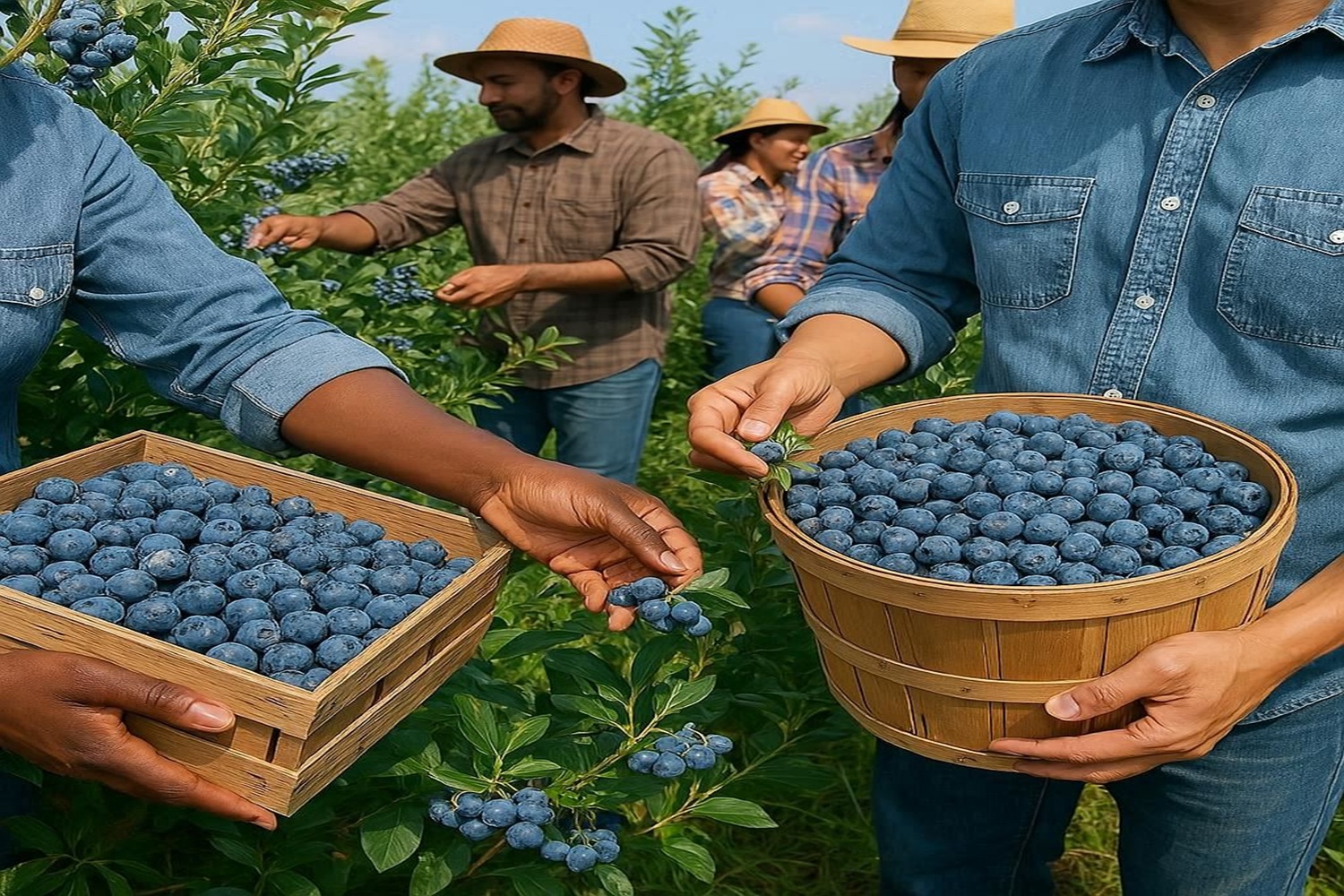
Besides a solid foreign earning and increasing export figures, blueberries also ensure sustainable jobs that tobacco has struggled to deliver in recent years. The sector already ensures the employment of near about 6000 workers, and most of them are women. They carry on the crucial harvesting work meticulously during the peak season. Without any doubt, delicate hands only can care for the delicate fruit.
Working in this harvesting sector creates a vital source of household income for many women, especially single mothers. This employment undeniably unlocks high hopes in a country where unemployment remains stubbornly high.
Challenges on the Ground in Zimbabwe
Nothing can be achieved in one day. Reaching a coveted goal needs time and hard work and tenacity. That is the reason Zimbabwe has to go a long way to become Africa’s “blueberry capital” despite the current strong initiative.
One bitter fact is Zimbabwe’s agricultural sector still grapples with unresolved issues. And, in truth, these issues have emerged from the very controversial land reform policies that surfaced during the early 2000s. These policies left many crucial questions regarding property rights and investor confidence.
Financing is another evident barrier. Blueberry farming requires significant upfront capital. And this capital is necessary for importing pots and soils and to confirm a smooth-chain logistics. Honestly, smallholder farmers cannot afford this entire arrangement without outside support.
Furthermore, exporters face a stringent foreign currency surrender requirement. According to this, exporters are bound to trade part of their U.S. dollar earnings for local currency through the central bank. This policy receives strong criticism from farmers who fear devaluation due to this.
So, the fact is such macroeconomic constraints should be addressed meaningfully, or else there is a strong probability that the African nation could miss out on the full benefits of its blueberry boom.
A Crop of Hope
Despite the above challenges, Zimbabwe breathes high hopes regarding the blueberry harvesting. The country is working to get more small- and medium-scale farmers involved in the blueberry production initiative.
Previous years witnessed how thousands of farmers achieved huge success in growing and supplying peas and mange touts to the European markets. The interesting thing is harvesting these crops and becoming a part of the international market was once considered almost an impossible task for the smallholders.
However, consistency in working helped the state to create an international identity. Similarly, blueberries could be the next item to establish its promising presence in the international arena after China opens its door for the country.
The shift from tobacco to blueberries is more than just an economic calculation for Zimbabwe. It represents a symbolic turning point of a country trying hard to shift its focus from fueling harmful habits abroad to supplying health-promoting foods. And, if this focus gets a real boost, then blueberries could help the country diversify its economy by creating jobs and thereby securing a fresh identity in global trade.
There is no denying that Zimbabwe may always be remembered as a tobacco country. But the sprouting promise of blueberries unlocks a greater chance of having a future that could be both healthier and more prosperous.
Also read: