Can the word “isolation” fit into the financial arena? Well, it is fit for the most economically isolated African nation, Eritrea. The country’s officials, although, claim a stable economy with strong self-reliance potential. But close observers argue that the African state’s financial model is failing quietly.
This history of isolation acquired a new look with the beginning of the regime of Isaias Afwerki, the president of the African nation Eritrea. The 79-year-old president has so far completed his long 32-year presidency in power since 1993, the year of independence. According to critics and many citizens, Isaias was greeted as a reformist African leader during his early presidential days.
During his fight for Eritrea’s independence, Isaias often voiced support for an elected government. However, his tenure has long defied those words and severely shattered the expectations.
A Policy of Self-Reliance—But at What Cost?
From the year 1993, Eritrea has pursued a rigid so-called policy of “self-reliance.” The government has refused loans and even shunned or rejected foreign investment. The African nation has even chosen to stay outside the periphery of IMF and World Bank systems.
The effort to sell the unclear concept of sovereignty from the 90s now uncovers the reality of the economy in Eritrea. Critics now opine that the country has actually developed an economic stagnation. And this makes Eritrea a technologically as well as fiscally backward state.
Currency Control: Official Rates vs. Reality
The currency of the African nation Eritrea, the nakfa, is now tightly controlled by the country. Foreign exchange is banned in the African state. Moreover, remittances are converted at official rates that vastly undervalue them.
The worst thing is a booming underground currency market, ignored publicly and tolerated privately, has sprung up, hammering and breaking investor confidence. And it unlocks the door to deepening public mistrust.
Remittances: A Survival Taxation?
Can remittances be a route of financial survival for a country? In Eritrea it can be. The state has no real export economy. Therefore, the country heavily relies on remittances. And the bitter reality is that they make up almost 30% of the nation’s GDP. The government taxes all diaspora workers two percent (2%) by decree. That means threatening services to non-compliant families. In addition, this forced regulation prompts accusations that Eritreans abroad are being treated as “cash cows” for an unsustainable state.
Sanctions May Be Lifted, But Isolation Persists
In 2018, the UN sanctions were lifted. But the prolonged isolation has already left deep and long-term scars. Yes, critical infrastructure remains severely underdeveloped. Foreign investors are absent. Moreover, diplomatic doors are still closed.
Now, all these clearly suggest that the leadership is in no mood to pave the path for the desperately required reformation. Instead, it has chosen to continue with so-called enigmatic autarky over integration.
An Accounting Black Hole
When the world is rapidly getting accustomed to the smell of AI in the human world, Eritrea is lagging far behind. The country has no public budget. As a result, there is no question of any audited economic data. And, in enigmatic autarky, independent oversight always remains unavailable.
Citizens, researchers, and aid agencies are left in the dark. And the worst part is little state revenue that includes mineral royalties and remittance taxes. Although these often disappear from view. And this fuels suspicions of waste and corruption.
Mining: A Drop in a Dry Bucket
The only key source of foreign exchange in Eritrea is the only working Bisha mine. Yes, it is the only pivotal way to earn some wealth through extracting gold, copper, and zinc. However, the large amount of the profit is kept hidden all the time. Only a small portion of the profit finally reaches the mainstream broader economy.
The crucial fact is Eritrea is facing the impoverished outcome of undeveloped agriculture. Also, food insecurity is acute. So, mining alone cannot be the foundation of national stability in the African country.
Youth Emigration: A Financial and Human Drain
Economic despair and indefinite national service have propelled the exodus of Eritrean youth. One very surprising fact is the African state, on the one hand, repels its citizens and, on the other hand, depends on them. For instance, the young flee, then send remittances to sustain the very politics they escaped. The unavoidable reality is this “desperate cycle of exile” is eating away at future economic potential.
What Lies Ahead?
The current economic system of Eritrea is no accident. It is a calculated product of deliberate policies especially designed to entrench political control. The chronology is very clear: secrecy over transparency, taxation over development, and isolation over engagement. Notably, the fragility of this system is now increasingly getting noticeable.
Mines alone can’t bring any positive economic growth in Eritrea. The country desperately needs reform, openness, and accountability. However, the mood of the current leadership clearly shows that the government will not allow any one of them to be a part of the nation’s economic arena.
At present, Eritrea faces a severe financial strain. And the long-term decline of positive reforms in the economy risks condemning a generation to poverty in perpetuity.
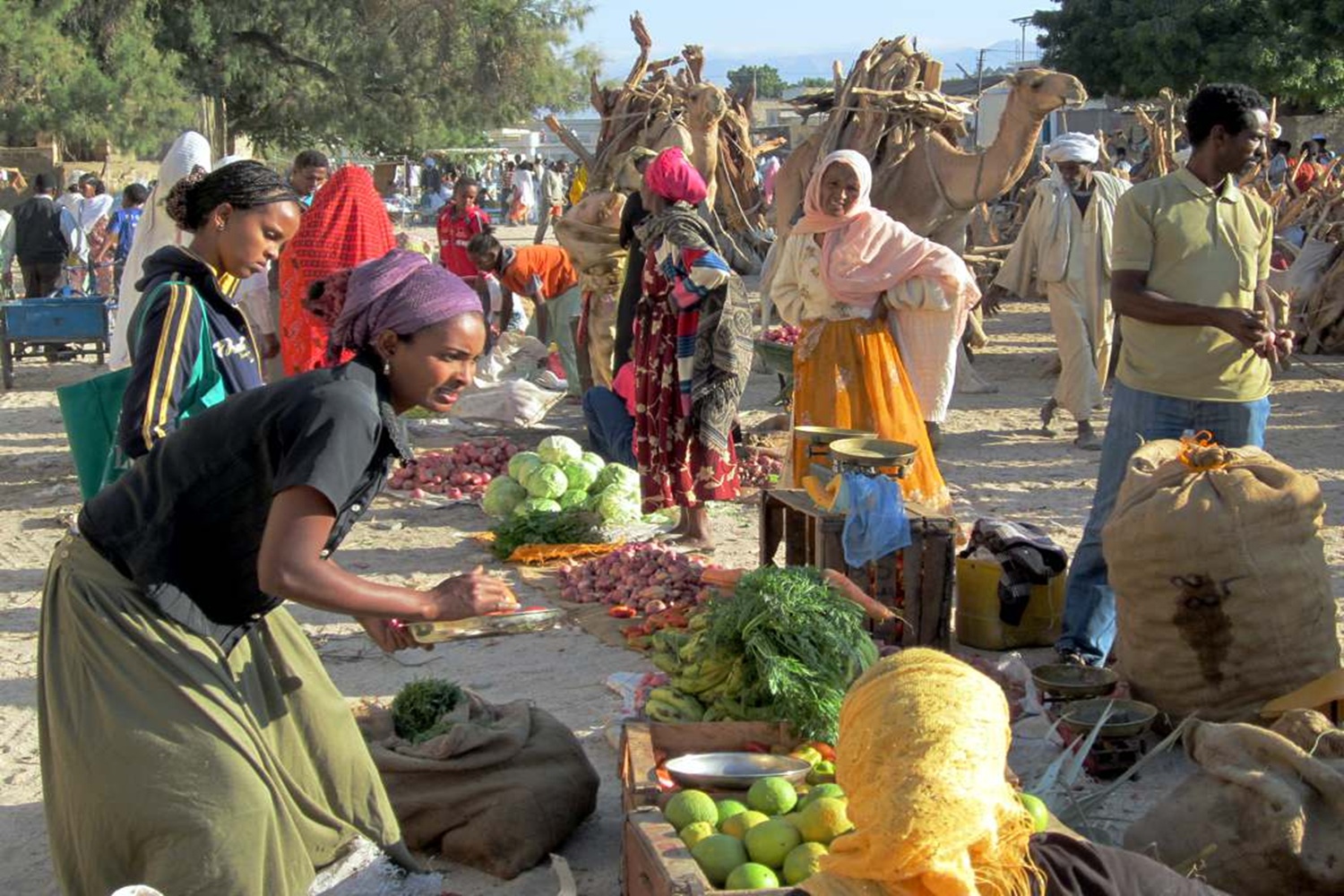
(Image By David Stanley from Nanaimo, Canada – Vegetable Market, CC BY 2.0, Link)
Also read:
The Global Finance Tightrope: Are We Traveling toward a Fragile Future?